In today’s world, most of us are glued to our screens due to our work or for entertainment, where health often takes a back seat. Physiotherapy plays a crucial role in helping individuals regain mobility, recover from injuries, and improve their quality of life. Whether it’s athletes bouncing back from injuries or elderly individuals managing age-related discomfort, physiotherapists are at the forefront of healing without the use of invasive treatments or medications.
Are you wondering how to become a physiotherapist? You have landed on the right page. In this blog, we’ll explore what physiotherapy is, who a physiotherapist is, the role of K.R. Mangalam University in shaping future physiotherapists, and how you can become one after the 12th. We’ll also cover career opportunities and necessary qualifications and answer the common question, i.e., is a physiotherapist a doctor?
What is Physiotherapy?
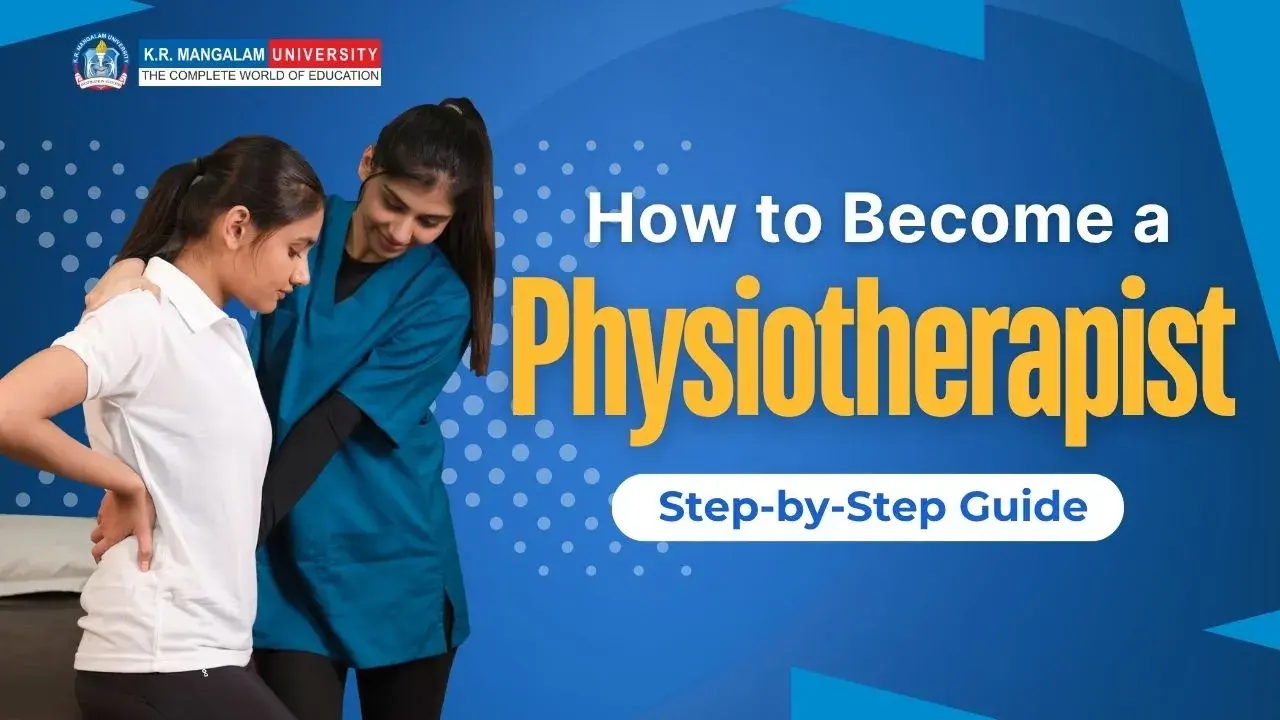
Physiotherapy involves diagnosing and treating physical disabilities, impairments and pains, as well as preventing them. Physiotherapists use manual therapy, exercises, electrotherapy and education to help patients achieve maximum physical strength, body function and overall well-being.
Physiotherapy differs from conventional medicine because it addresses the fundamental source of problems instead of focusing on symptom treatment. Physiotherapy provides individualised non-invasive care for patients who need help with chronic back pain or post-surgical rehabilitation, or sports injuries.
Who is a Physiotherapist?
Physiotherapists are licensed healthcare experts who help patients recover their movement abilities after injuries, illnesses or disabilities. Physiotherapists maintain expertise in body mechanics while working together with doctors, surgeons and other medical staff to deliver complete patient care.
Also Read: Physiotherapy Course Details: Eligibility, Fees, & Admissions
What Does a Physiotherapist Do?
Are you curious about the duties of a physiotherapist? A physiotherapist performs multiple responsibilities in their role. The following list describes their key responsibilities:
- They diagnose physical conditions by conducting tests and reviewing patients’ medical histories.
- They develop individualised treatment plans for patients through proper assessment and evaluation of their condition.
- They treat joint manipulation and soft tissue mobilisation through manual therapy, where they use their hands to assess and treat these conditions.
- Through therapeutic exercises, physiotherapists help patients regain strength while improving flexibility and coordination.
- They use treatment methods such as electrotherapy techniques, which include ultrasound, TENS and laser therapy.
- They provide information to patients about posture correction, as well as injury prevention and ergonomics.
Physiotherapists serve patients across all age groups , whether it’s infants with developmental problems or elderly patients with arthritis or stroke recovery needs.
Is Physiotherapist a Doctor?
The question about physiotherapists’ status as medical doctors (MBBS degree holders) emerges frequently among students and patients.
Physiotherapists maintain their status as specialised healthcare practitioners who possess professional qualifications and licenses, although they do not hold MBBS degrees. The prefix ‘PT’ before their name (e.g., PT Raj Sharma) is allowed for BPT graduates in India, but they cannot use ‘Dr.’ unless they earn a doctorate.
However, in a few countries and even in parts of India, physiotherapists are informally referred to as doctors due to their clinical expertise. They undergo rigorous education and clinical training and are vital members of the healthcare ecosystem.
Physiotherapy Course at K.R. Mangalam University
The Bachelor of Physiotherapy (BPT) programme at K.R. Mangalam University (KRMU) provides an excellent starting point for those who want to become top-tier physiotherapists. The 4.5-year BPT programme at KRMU is designed to prepare students for a successful career in healthcare through its state-of-the-art infrastructure, industry-aligned curriculum and highly qualified faculty.
Key Features of the BPT Programme at KRMU
- Comprehensive Curriculum: Covers anatomy, physiology, kinesiology, electrotherapy, exercise therapy, and rehabilitation.
- Practical Training: Hands-on clinical exposure through internships and collaborations with reputed hospitals and rehabilitation centres.
- Modern Labs: Equipped with the latest physiotherapy equipment to aid practical learning.
- Research Opportunities: Encourages research and innovation in the field of physical therapy.
- Career Guidance: Supportive career services and placement assistance.
With its focus on academic excellence and skill development, K.R. Mangalam University is nurturing the next generation of physiotherapy professionals who are ready to serve in India and globally.
Programme Syllabus
The year-wise syllabus of the Bachelor of Physiotherapy (BPT) programme at KRMU is given below.
| Year | Programme Syllabus |
| 1 | Anatomy (Theory & Practical)
Biochemistry (Theory) Exercise Therapy I (Theory & Practical) Physiology (Theory & Practical) Electrotherapy – I (Theory & Practical) Environmental Studies |
| 2 | Pathology & Microbiology
Electrotherapy II (Theory & Practical) Biomechanics (Theory & Practical) Computer Application Pharmacology Exercise Therapy II (Theory & Practical) Sociology & Psychology |
| 3 | General Medicine (Theory & Practical)
Orthopedics (Theory & Practical) Physiotherapy in Orthopedics & Sports Conditions (Theory & Practical) General Surgery (Theory & Practical) Physiotherapy in Cardio Respiratory Conditions (Theory & Practical) Clinical Training |
| 4 | Neurology (Theory & Practical)
Physiotherapy in Neurology (Theory & Practical) Rationale of Rehabilitation (Theory & Practical) Research Methodology & Biostatics OBS & Gynae, ENT, Ophthalmology Physiotherapy in General Medical and Surgical Conditions (Theory & Practical) Physiotherapy Ethics and Law Clinical Training |
| 5 | Internship (6 months) |
How to Become a Physiotherapist After 12th?
If you are in Class 12 or have just completed your board exams and wish to pursue a career in physiotherapy, here’s the step-by-step guide to how to become physiotherapist after 12th:
- Eligibility: You must pass 10+2 with Physics, Chemistry, and Biology as compulsory subjects with a minimum aggregate of 50% marks (common eligibility across colleges and universities).
- Apply for Bachelor of Physiotherapy (BPT): Enrol in a recognised college or university offering a BPT programme. Some institutes may conduct entrance exams or interviews as part of the admission process.
- Complete the BPT Degree: It is a 4.5-year undergraduate programme, including a 6-month mandatory clinical internship.
- Optional Postgraduate Studies: After BPT, you can pursue a Master’s in Physiotherapy (MPT) to specialise in areas like neurology, orthopaedics, sports, cardiopulmonary, or paediatrics.
- Get Licensed: While India does not have a centralised licensing exam yet, you should register with a state council (where applicable) or follow the guidelines set by the Indian Association of Physiotherapists (IAP).
Qualifications to Become a Physiotherapist
To pursue a career in physiotherapy, you need to meet the following academic requirements:
Academic Requirements:
- 10+2 with PCB (Physics, Chemistry, Biology)
- Bachelor of Physiotherapy (BPT) – 4.5 years
- Optional: Master of Physiotherapy (MPT) – 2 years
Career Options After Physiotherapy
Once you complete your BPT or MPT, a world of opportunities awaits. Physiotherapy is one of the few healthcare careers that allows flexibility in terms of settings and specialisations.
Career Paths You Can Explore:
- Clinical Physiotherapist: Work in hospitals, rehab centres, or private practice.
- Sports Physiotherapist: Assist athletes with injury prevention and recovery.
- Orthopaedic Physiotherapist: Specialises in bone, joint, and muscle rehabilitation.
- Neurological Physiotherapist: Help patients with conditions like stroke, Parkinson’s, or spinal cord injuries.
- Pediatric Physiotherapist: Work with children with developmental disorders.
- Cardiopulmonary Physiotherapist: Assist patients with heart and lung conditions.
- Home Healthcare Professional: Provide physiotherapy services at patients’ homes.
- Academic & Research Roles: Become a lecturer, researcher, or pursue a PhD.
- Entrepreneurship: Open your own physiotherapy clinic or wellness centre.
- Work Abroad: Countries like Canada, the UK, Australia, and the UAE have high demand for skilled physiotherapists.
Conclusion
Physiotherapy represents medical recovery and rehabilitation services that improve overall life quality. The profession of physiotherapy unites scientific principles with compassionate care through personal connections in a unique way that sets it apart from other careers. Physiotherapy presents an excellent career choice for those who care about healthcare and people and seek both personal fulfilment and professional advancement.
K.R. Mangalam University provides complete BPT programme support through excellent faculty and industry-ready training to help you achieve your goals. Start your journey toward a fulfilling career in physiotherapy at KRMU. Apply today!
Also Read: Everything about physiotherapy course after 12th
FAQs
Frequently Asked Questions
What is the Programme fee?
The BPT programme fee at KRMU is Rs 1,58,000 per year.
Does K.R. Mangalam University have good labs and clinical facilities?
Yes, KRMU, the best university in Delhi NCR, has a Biomechanics Lab, an OPD, a Functional Diagnostic Lab, an Exercise Therapy Lab and an Anatomy Lab.
Does K.R. Mangalam University have its entrance exam?
Yes, the University has its own entrance exam - KREE.
Can a student apply to multiple programmes?
Yes, you can choose up to 3 programmes on one application form.
How much does a Physiotherapy earn?
A physiotherapist earns between ₹2.5 to ₹6 lakhs per year, depending on experience, location, and specialisation. Senior professionals or those in private practice can earn even more.